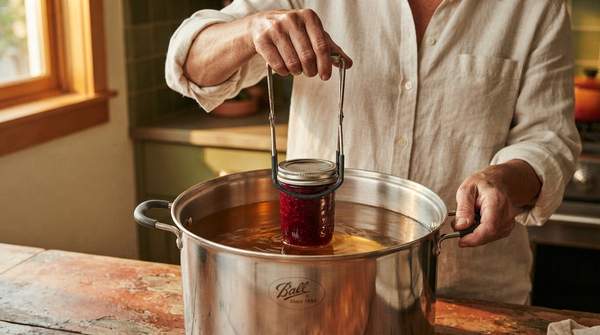
Why pH, Heat, and Headspace Decide Whether Water Bath Canning Is Safe
Water bath canning safety is determined by three critical scientific pillars: sufficient acidity (pH below 4.6) to prevent botulism, heat penetration to destroy spoilage microbes, and a proper vacuum seal to prevent recontamination. Understanding these principles ensures safe food preservation.
Water bath canning is safe for one reason and one reason only: the food is acidic enough that Clostridium botulinum spores cannot grow. The boiling water bath, which heats food to 212°F, cannot destroy those spores. Instead, safety rests on three scientific pillars working together—acidity that blocks botulism, heat that destroys yeasts, molds, and vegetative bacteria, and a vacuum seal that keeps oxygen and new contamination out. Understand these pillars, and you can trace every rule in a tested recipe back to the threat it neutralizes. The Core Science of Water Bath Canning Safety Every canning rule exists to answer one question: which microorganisms could survive, and what stops them? The National Center for Home Food Preservation explains that Clostridium botulinum exists as spores or as vegetative cells. The spores sit harmlessly on most fresh food surfaces, but when conditions suit them—moist, low-acid food, temperatures between 40° and 120°F, and less than 2 percent oxygen—they…