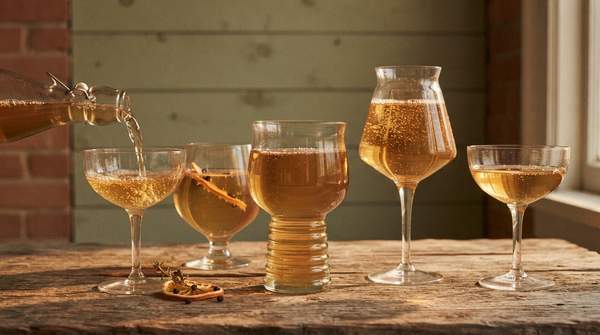
Choosing the right craft cider for dinner doesn't require memorizing approved combinations. It requires reading your plate. Identify whether your meal's dominant character is rich and savory, spicy, or sweet, then pick a cider whose acidity, sweetness, or fruitiness either complements or contrasts that profile. That single habit—flavor first, bottle second—is what separates a confident pairing from a lucky one.
Understanding Cider Pairing Principles
Experts consistently describe pairing as a two-way conversation rather than a lookup table. Cider educator Jennie Dorsey, quoted by Kristen Richard at Alcohol Professor, explains that "you can either start with the dish or the cider and work backwards from there," though she prefers starting with the food because its flavor profile is easier to predict. Once the dish is in mind, the work is naming its basic flavors—sweet, salty, bitter, acid, and umami—and then asking whether the cider should echo those flavors or push against them. A contrasting pairing can do more than balance: as pairing specialist Bell-Uribe notes, the cider and dish can bring out new flavors in one another.
The 'Grows Together, Goes Together' Rule
When in doubt, look to the land. The principle that "if it grows together, it goes together"—cited by both Cider Culture's Meredith Collins and by Manoff Market Gardens—suggests pairing regional ciders with regional dishes, since local orchards and local kitchens evolved from the same soil and seasons. Collins offers a vivid Virginia illustration: creamy, savory peanut soup, a Colonial Williamsburg classic, matched with Big Fish Cider Co.'s Virginia Hewe's Crab, whose tart brightness contrasts the soup's lusciousness while its own creamy character matches the dish's heft. The same logic anchors the Northwest Cider Association's regional pairing guidance, which matches Pacific Northwest ciders to the foods of that region.