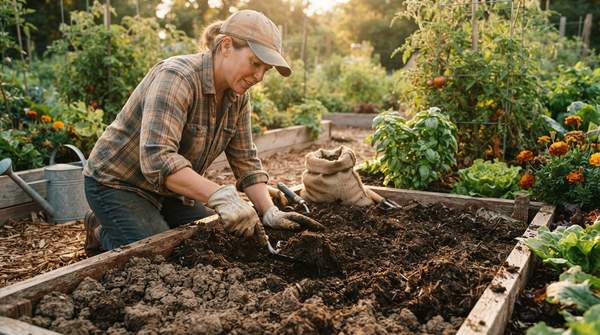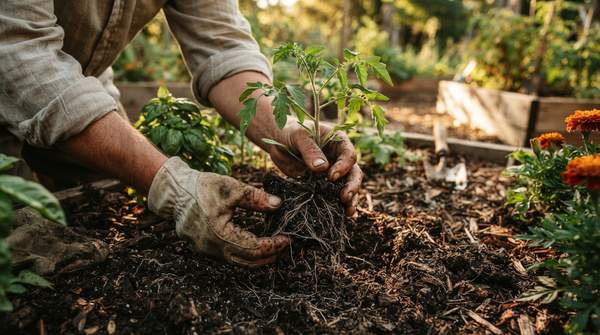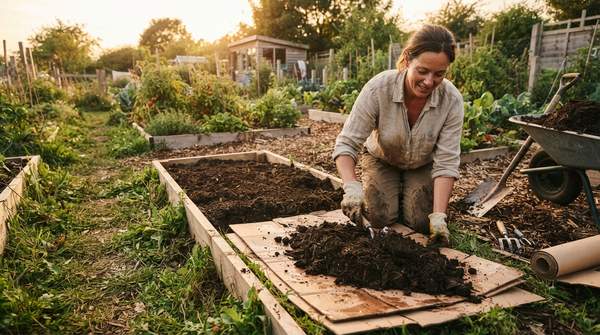
The fastest way to a healthier garden is not what you spray on your plants but what you feed the organisms living beneath them. Soil is home to a large and diverse living community of beneficial microorganisms and insects, and, as Penn State Extension explains, they contribute to soil health by maintaining a loose, aggregate soil structure, decomposing organic matter, recycling nutrients, and biologically suppressing plant pests. The practical takeaway for a home gardener is simple: choose two or three practices—adding organic matter, planting cover crops, diversifying your plantings, applying mulch—and match them to your soil's specific problems. This article explains who these microbes are, what they do, and how to pick the right practices for your plot.
The Unseen World Beneath Your Garden: Why Soil Microbes Matter
Healthy soil is not an inert growing medium; it is an ecosystem. Penn State Extension frames soil health as how well a soil's makeup functions to support the growth and health of plants, and the biological component of that makeup is where the quiet, transformative work happens. Microbes perform critical functions in soil food webs, decomposing organic materials, cycling nutrients, and improving soil structure, according to soil ecologists at Colorado State University's Natural Resource Ecology Laboratory.
Why does this matter at the scale of a backyard bed? Because the nutrient in your compost or mulch is not yet in a form your tomatoes can use. Something has to convert it. That conversion—breaking down organic matter into plant-absorbable nutrients—is performed by living organisms, and the structure of your soil, its looseness and its aggregates, is shaped by their activity. When this system works well, the difference is visible: plants grow more vigorously, resist diseases better, and produce more abundantly.
There is also a regenerative angle. The Colorado State researchers note that recent research suggests that by fostering an efficient and active soil microbiome, soil regeneration can be accelerated beyond typical natural rates. In other words, a gardener who feeds the microbes is not merely maintaining soil but actively rebuilding it.