For millennia, long before refrigeration or canning, humanity relied on a mysterious and powerful process to preserve food: fermentation. This ancient technique, which transforms perishable goods like milk, vegetables, and grains into staples with extended shelf lives and unique flavors, was practiced globally without any scientific understanding of the microscopic forces at work. At its core, fermentation was a practical, life-sustaining solution to the fundamental challenge of storing seasonal harvests and ensuring a stable food supply through lean times. It represents one of civilization's earliest forays into biotechnology, born from observation and necessity.
The Three Stages of Fermentation Understanding
The human relationship with fermentation has evolved over thousands of years, a journey that can be understood in three distinct stages. This progression tracks our understanding from the passive observation of a natural phenomenon to the deliberate control and optimization of a powerful biological process. This framework helps clarify how the "why" behind the practice changed as knowledge grew.
Ancient Practice: An Observed Phenomenon
The earliest encounters with fermentation were likely accidental. For millennia, people used this process without fully understanding its mechanics, relying on trial and error to create staples like bread, beer, and cheese. One historical account suggests the first yogurts may have formed unintentionally in goat bags carried on the backs of camels, where the heat of the North African desert created ideal conditions for milk to transform. Early humans would have observed that under certain conditions, some foods "spoiled" in a way that made them not only safe to eat but also resistant to further decay. This was empirical science at its most fundamental: a reliance on observable outcomes to develop practices that worked, even if the underlying cause remained a complete mystery.
Traditional Application: Intentional Preservation
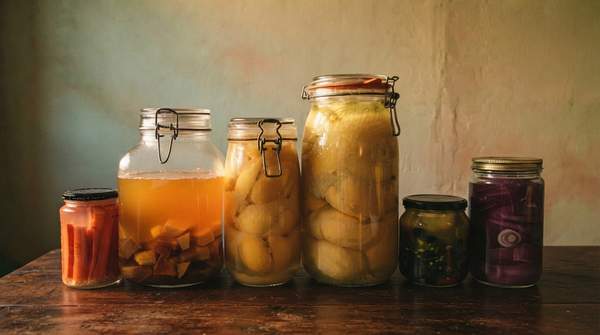
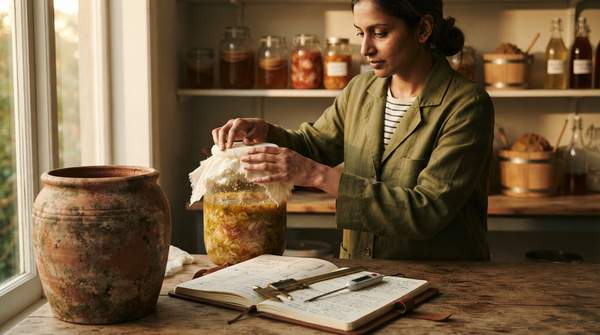
Over centuries, these accidental discoveries were refined into deliberate and reliable techniques passed down through generations. Fermentation became a cornerstone of food preservation, a way to store a garden harvest or keep milk from spoiling long before its nutritional value was lost. As described by the Living History Farms museum, in the early 20th century, fermentation was primarily understood as a method to store food without the need for refrigeration. This "inherited wisdom," as a 2021 article in the journal Metabolites describes it, allowed diverse cultures to select the right ingredients and create the proper conditions to produce safe, healthy, and flavorful foods. This led to a rich global tapestry of fermented products, from sauerkraut and kimchi in Europe and Asia to sourdough and kefir, each adapted to local climates and available crops.
Modern Understanding: Scientific Control
It was not until the 19th century that the mystery behind fermentation was finally solved. In the 1850s, French chemist Louis Pasteur conducted groundbreaking research demonstrating that microorganisms like yeast and bacteria were responsible for the process. According to the food technology company Verley Food, Pasteur's work transformed fermentation "from an art into a science." He identified two primary types of fermentation—alcoholic, driven by yeast, and lactic acid, driven by bacteria. This discovery laid the foundation for the fields of microbiology and biotechnology, allowing for controlled, efficient, and safe food production on an industrial scale. This scientific insight represents the latest stage in fermentation's long history, moving from empirical practice to full scientific understanding and control.