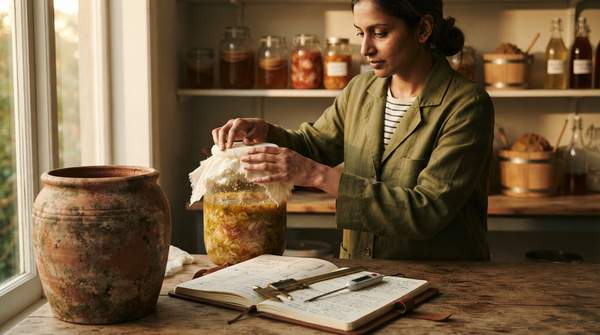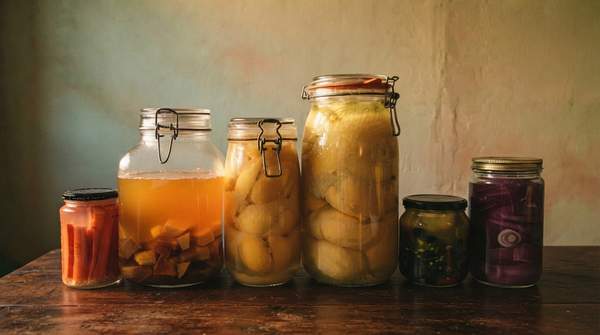
When you pack cabbage into a jar and wait, you are not simply letting food spoil slowly. You are hosting a relay race of bacteria, each group taking the baton as conditions change, converting natural vegetable sugars into acids, gases, and alcohol. The end result is a food that resists spoilage and tastes distinctly sour and complex. Understanding this sequence is what separates anxious fermenters from confident ones, because every bubble and tang in your jar maps to a specific microbial event.
Stage 1: Setting the Scene for Lactic Acid Bacteria
Fermentation begins with the vegetables themselves. Every cabbage leaf, cucumber, and carrot carries natural sugars, and those sugars are the fuel for the entire process. According to Virginia Cooperative Extension's guide to vegetable fermentation, the most important fermenters belong to the lactic acid bacteria family — specifically Leuconostoc, Lactobacillus, and Pediococcus species. These microbes are already present on the vegetables and in the surrounding environment, which is why wild fermentation requires no added cultures.
What you do at the start is less about adding anything and more about shaping the environment. An anaerobic — oxygen-free — setting encourages the growth of lactic acid bacteria strains, as a review of industrial fermentation in the food industry explains. That is the practical logic behind submerging vegetables beneath brine: you are choosing which microbes get to work. Salt plays a supporting role here, drawing water out of the vegetables to form brine and helping favor the salt-tolerant lactics over spoilage organisms. The stage is set the moment your vegetables are fully submerged and oxygen is excluded.
At this early point, the jar may seem quiet, but the microbial population is already shifting. The conditions you created — no oxygen, salt, and abundant sugar — determine which bacteria can multiply and which cannot. Everything that follows flows from this selective setup.
Stage 2: The Rise of Heterofermentative LAB and Flavor Development
The first major fermenters to dominate are the heterofermentative lactic acid bacteria, and Leuconostoc mesenteroides is the classic example. The Virginia Extension guide describes how, in the sequential growth observed in sauerkraut, Leuconostoc becomes dominant as the pH begins to drop. These bacteria are generous chemists: rather than producing a single compound, they generate a whole portfolio of byproducts from the vegetable sugars.
That portfolio includes lactic acid, acetic acid, ethanol, and carbon dioxide. Each contributes something you can observe or taste. The carbon dioxide is what you see as bubbles rising in the brine — the visible signature of active fermentation. The acids begin lowering the pH of the environment, and the ethanol and acids together contribute to the characteristic flavor and aroma of the ferment. This is why the early stage of a ferment matters so much for taste: the compounds that make your sauerkraut interesting, not merely sour, are largely laid down by these early heterofermentative workers.
This stage is also self-limiting in an elegant way. As Leuconostoc produces acid, it gradually makes the environment less hospitable to itself. The very acids that create flavor also lower the pH past the point where these early fermenters thrive. They have, in effect, prepared the environment for their successors — and done the flavor work that those successors cannot replicate.