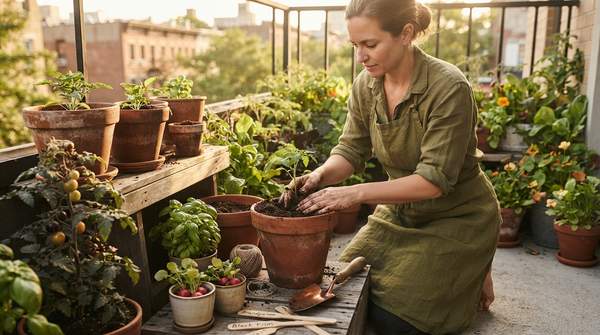
Yes, you can grow genuine heirloom vegetables on a balcony, stoop, or sunny windowsill. The trick is not luck or expensive equipment—it is matching compact, open-pollinated varieties to containers with enough depth and volume for their roots. Seed Savers Exchange, a nonprofit dedicated to preserving garden heritage, sells a curated Container Garden Seed Collection of six small-space varieties, and university extension guidance supplies the sizing principles that make them succeed.
Introduction to Heirloom Container Gardening
Heirloom vegetables carry stories: an Italian broccoli that reached American shores in 1890, a tomato bred for a windowsill. Container gardening lets urban growers keep those stories alive where a backyard doesn't exist. The University of Wisconsin's Milwaukee County Extension calls container gardening "a simple and versatile means to garden for all ages and abilities," and notes a practical bonus: growing in soilless media sidesteps soil-borne diseases, weeds, and compaction. Choosing the right vegetable and variety for the given container, the extension stresses, is what matters most.
Principles for Selecting Heirloom Varieties for Containers
The single most important selection principle is growth habit. The Milwaukee County Extension recommends determinate, dwarf, and compact vegetable varieties as best suited for containers, because a sprawling indeterminate tomato will overwhelm a five-gallon pot by midsummer. The University of Maryland Extension adds a parallel rule: varieties listed as bush, dwarf, or compact can be grown in smaller containers than their full-size counterparts. So when you shop for heirloom seeds, look for those descriptors in the variety description before anything else.
Heirloom Vegetable Container Size Guide
Container size is where most small-space gardens fail, so it helps to sort vegetables into three tiers by root and canopy needs, then apply the minimum volumes that extensions and seed suppliers publish. The table below merges the Milwaukee County Extension's category guidance with the University of Maryland Extension's per-crop minimums and San Diego Seed Company's chart, so you can size a pot before you buy a seed packet.
| Category | Examples | Minimum volume | Minimum depth |
|---|---|---|---|
| Small plants | Leaf lettuce, spinach, radishes, cilantro, onion sets, beets | ½–2 gallons (½ gallon for leaf lettuce and beets; 2 gallons for carrots and Swiss chard) | 4–6 inches |
| Medium plants | Bush beans, cherry tomatoes | 2 gallons | Not consistently specified across sources |
| Larger plants | Standard tomatoes, peppers, eggplant, broccoli, cabbage, cucumbers | 5 gallons (10 gallons for summer squash) | 8–12 inches |
Two nuances from the University of Maryland Extension are worth keeping in mind. Plants grown in smaller containers will survive, but they grow larger and produce more fruit as container size increases. And the Milwaukee County Extension's own list places peppers and bush beans among the larger, five-gallon plants—so when guidance differs, erring toward the bigger pot is the safer bet.