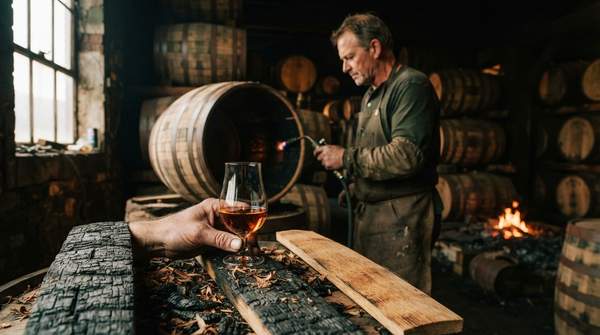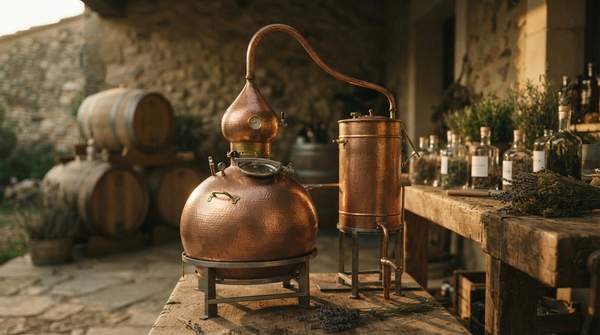
Craft spirit production is a meticulous journey that transforms raw ingredients into complex beverages, with each stage—fermentation, distillation, and aging—playing a crucial role in defining the final flavor profile. Distillers make deliberate choices, from selecting yeast strains to choosing still types and barrel woods, to manipulate these processes and achieve distinct characteristics in their spirits. This approach blends scientific understanding with artisanal judgment to create unique beverages.
The terms "small-batch distilling" and "craft distilling" are often used interchangeably, though they are not always synonymous. Regardless of the label, the essence lies in the distiller's vision and craftsmanship, ensuring that each bottle captures a commitment to excellence, as noted by Usama Khadim of Smallbatchdistill. This journey from raw materials to a finished spirit is a testament to the intricate chemistry and careful artistry involved.
Fermentation: The Foundation of Flavor
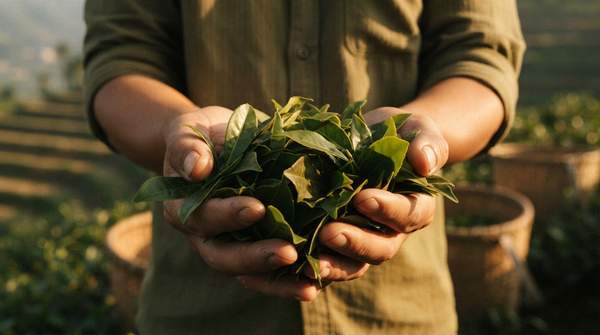
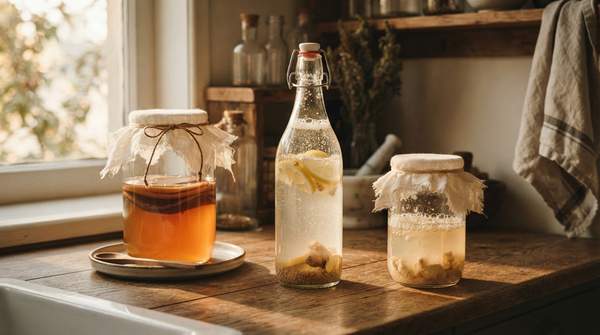
All spirits begin their life with fermentation, the foundational process where alcohol is created. During this initial stage, enzymes naturally present in the chosen grains or fruits work to break down complex starches into simpler sugars. Once these sugars are available, yeast is introduced, consuming them and converting them into alcohol, as well as other compounds that are vital contributors to the spirit's initial flavor profile, according to spiritsEUROPE.
This conversion is where the foundational character of the spirit begins to take shape. Craft distillers often view this as a pivotal moment for innovation, meticulously testing various yeast strains, adjusting fermentation times, and experimenting with different combinations of grains. Usama Khadim describes this as "where the magic happens," highlighting how these deliberate tweaks allow distillers to produce unique and distinctive flavors even before the liquid enters the still.
Pot Stills vs. Column Stills: Shaping Spirit Character
The still stands as the heart of the distillation process, serving the critical function of separating alcohol from water and other elements present in the fermented liquid. This separation relies on the principle that alcohol has a lower boiling point than water. Distillers must carefully regulate temperature, timing, and pressure to achieve the desired quality in the final product, explains Usama Khadim.
The design of the still profoundly influences the style and flavor of the resulting spirit. Craft distillers primarily utilize two types: pot stills and column stills. Each type offers distinct operational characteristics and impacts flavor retention differently, allowing distillers to achieve specific spirit profiles tailored to their vision.
Still Types and Their Flavor Impact
| Still Type | Distillation Method | Flavor Impact | Examples of Spirits |
|---|---|---|---|
| Pot Still | Pot stills are typically made of copper and operate through batch distillation, requiring the still to be emptied and refilled after each run. This method allows for greater control over individual batches. | Pot stills produce spirits with a richer, more robust flavor profile due to retaining more congeners and flavor compounds from the fermented wash. The lower efficiency in separating compounds results in a more characterful spirit. | Whiskey, Cognac, and some rums are typically produced using pot stills. These spirits are known for their complex and distinctive flavors. |
| Column Still | Column stills, also known as continuous stills, consist of multiple plates or trays. They allow for continuous distillation, where the fermented liquid is constantly fed in and distillate is continuously collected. This method is more efficient for large-scale production. | Column stills produce lighter, purer spirits with a cleaner flavor profile due to their efficiency in separating alcohol from other compounds. The higher proof and reduced congener content result in a more neutral spirit. | Vodka and some gins are commonly produced using column stills. These spirits are often valued for their smoothness and lack of strong inherent flavors. |
Pot stills are traditional copper stills widely favored in whiskey and craft distilling for their ability to preserve flavor compounds. As Copenhagen Distillery details, they operate through batch distillation, a slower process that results in richer flavor retention. This method allows for a more characterful spirit because it is less efficient at separating all compounds, thereby retaining more of the congeners and flavor elements from the original fermented wash.
In contrast, column stills, also referred to as continuous stills, are designed with multiple plates or trays, enabling distillation to happen constantly rather than in batches. This continuous operation allows for a more efficient separation of alcohol from other compounds. As a result, column stills typically produce lighter, purer spirits with a cleaner flavor profile, often characterized by a higher proof and reduced congener content, according to Copenhagen Distillery.