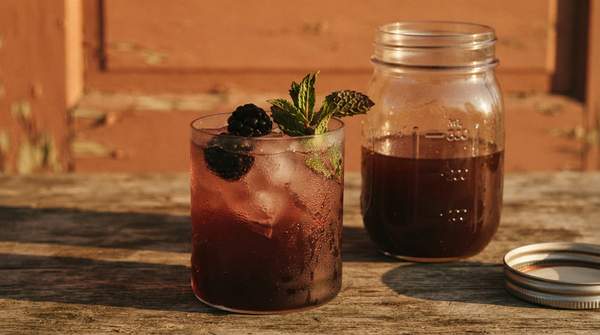
A shrub is a sweet-tart fruit syrup built on three humble ingredients—fruit, sugar, and vinegar—and its history is really several histories braided together. The word has described an English alcoholic cordial, an American preservation method, and today's craft-cocktail and mocktail ingredient. Understanding those phases is the key to making your own, because the modern shrub you'll build on your counter is the direct descendant of a vinegar-and-fruit technique that began in 17th-century England and crossed the Atlantic to colonial America.
The Ancient Roots and English Beginnings of Shrub
The word itself arrived late, even if the drink's ancestors were older. According to Tim Oakley's history for Difford's Guide, the first mention of "shrub" in the English dictionary came in 1747, where it was defined as "any of various acidulated beverages made from the juice of fruit, sugar, and other ingredients often alcohol." In the English sense, shrubs were a form of cordial, a family of drinks that had been developing in England since the late 15th century.
These early shrubs were not the bright syrups we know today. They were alcoholic medicines, used to revitalise the heart, body and spirit and to cure disease. Oakley ties their spread through England to the rise of smuggling, which developed in the 1680s when high taxes on luxury imports such as tea, brandy, rum and genever created a vigorous black market in spirits that cordials could mask and enhance.
There is also a Middle Eastern thread in the shrub's lineage. Writing at Liquid Culture, Monica C traces a parallel tradition in which spices, herbs and fruit were combined so that Muslims could enjoy a refreshing beverage within their cultural guidelines. She notes that water contamination was a common issue of the era, limiting safe daily fluids, and that shrub-style drinks quenched thirst while remaining safe to drink. The name itself echoes the Arabic "sharāb," a drink—though the English and American traditions each took the idea in their own direction.