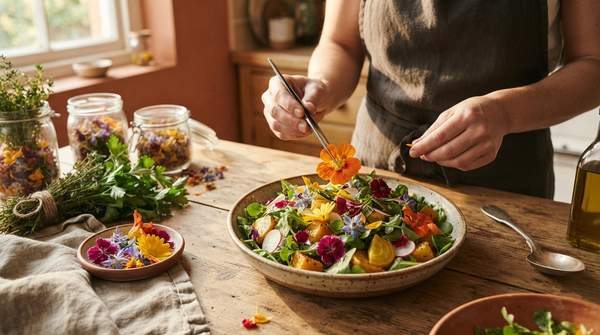
Edible flowers are not merely decoration. Chive blossoms bring a mild onion-garlic flavor with floral notes, cilantro flowers deliver an intense version of the herb's familiar taste, and calendula petals can stand in for saffron by lending golden color to rice. The secret to cooking with flowers is treating each one as an ingredient with its own personality—some, like dill flowers, are powerfully aromatic, while others, like calendula, contribute more color than flavor. This guide compares six common edible flowers so you can match the right blossom to the right plate, from salads to main courses to desserts.
A Culinary Palette: Common Edible Flowers and Their Flavors
Think of edible flowers as occupying the same spectrum as herbs: some are sharp and savory, others delicate and sweet. A comprehensive scientific review of edible flowers published in the PMC library notes that most edible flowers are used in beverages, infusions, salads, and soups, and highlights chive flowers in particular for their gentle allium character. Garden writer Steven Biggs of Food Garden Life emphasizes the practical side—calendula, he notes, is "great for colour, though not a lot of flavour," while rose petals can turn bitter if not prepared carefully.
The table below gathers the flavor profiles, best uses, and preparation notes for six widely available flowers, drawing on horticultural and culinary guidance from Lara Wadsworth's cooking guide at True Leaf Market, Biggs's edible-flower guide, and the PMC review. Read it as a decision tool: identify the flavor your dish needs—peppery, herbal, nutty, or floral—then work across the row to find the preparation that delivers it.
| Flower | Flavor Profile | Best Culinary Uses | Preparation Notes |
|---|---|---|---|
| Chive flower | Mild onion-garlic flavor with a hint of floral notes | Dish preparation where a gentle allium note is welcome | Use fresh as a garnish or folded into savory dishes |
| Cilantro flower | Strong, intense cilantro flavor | Salsas, salads, guacamole, stir-fries, taco toppings; Latin and Asian dishes | Substitute anywhere cilantro leaves are used |
| Dill flower | Classic, intense dill with a very strong aroma | Pickling, salads, fish, dipping sauces, marinades | Use in any way you would use dill leaves |
| Calendula | Spicy, peppery, tangy, slightly bitter; some varieties offer more color than flavor | Salads, soups, pasta, rice dishes; coloring cheeses and butter as a saffron substitute | Pluck off the petals before use; dried petals add color to rice |
| Sunflower | Nutty, a little bitter, a little sweet; varies by variety | Petals in salads or as a garnish for soups | Flavor shifts slightly depending on the specific variety |
| Rose | Floral; the lower white portion of the petal can be bitter | Chopped petals in fruit salads; petals over whipped cream for dessert | Taste-test first and remove the white portion if needed |
Reading the table as a flavor map reveals a clear pattern, and the pattern is what makes flower cookery manageable rather than mysterious. The herb flowers—cilantro and dill—are the boldest of the group, best treated as seasonings rather than garnishes: a little goes a long way, and their intensity is an asset in dishes that can stand up to it. Chive flowers sit in the middle, offering softness along with their onion note, which makes them the safest choice when you want allium flavor without raw onion's sharpness.
Calendula and sunflower lean toward the visual, contributing color and a mild edge rather than a dominant taste. This is not a failing—it is a role. Biggs points out that calendula's dried petals work as a homegrown saffron substitute precisely because they tint rice, cheese, and butter without hijacking the flavor of the dish. Rose is the most dessert-friendly of the six, provided its bitter white base is trimmed away, and its perfume suits sweets far better than the savory end of the table.
Two qualifications from the sources deserve emphasis before you cook. First, flavor varies: begonias, for instance, can carry a citrus-like taste with a slight bitter aftertaste depending on species and growing conditions, and sunflower flavor shifts with the specific variety. Second, preparation matters as much as selection—calendula petals should be plucked from the flower head, and rose petals should be taste-tested before they reach the plate.