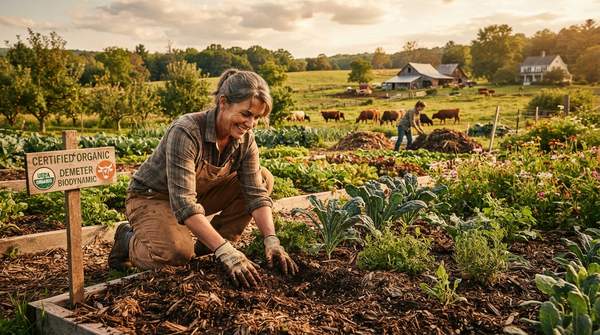
If you want produce grown without synthetic chemicals, both the USDA Organic seal and the Demeter Biodynamic label deliver that promise. The difference is what each standard asks of the farmer beyond the ban on synthetics. USDA Organic, a government-backed standard, requires practices that cycle resources, conserve biodiversity, and preserve ecological balance. Demeter Biodynamic certification starts from that same organic baseline and then adds a codified, holistic system: a minimum of 10% of farmland reserved for wild biodiversity, specialized herbal and mineral compost preparations, farming operations timed to a lunar calendar, and a requirement to treat the whole farm as a single, self-sustaining organism.
Understanding Organic Certification: The USDA Standard
The USDA Organic label indicates that a food or agricultural product was produced according to the USDA's organic standards, which are developed and enforced by the department's National Organic Program. The standards set specific requirements for different types of products, and the program's stated purpose is to let consumers feel confident purchasing organic goods.
In practice, the standard is largely defined by what it prohibits and what it requires operations to do. Certified operations must use practices that cycle resources, conserve biodiversity, and preserve ecological balance. On the input side, organic production excludes synthetic fertilizers, pesticides, herbicides, and genetically modified organisms, as described in explainers of organic labeling. In winemaking, for example, the fermentation process follows strict regulations prohibiting artificial additives and limiting sulfite use.
What the USDA standard does not do is prescribe a particular philosophy of the farm. It asks growers to conserve biodiversity, but it does not mandate a specific percentage of land set aside for wild areas. It is a prohibitive and process-oriented framework rather than a prescription for how the farm should function as a whole.
The Foundational Principles of Biodynamic Farming
Biodynamic farming was born from a series of agricultural lectures given in 1924 by the Austrian philosopher and social reformer Rudolf Steiner, who had been invited to a Silesian farm estate by farmers concerned about the impact of nitrogen fertilizer on soil quality. As the Sustainable Food Trust recounts, Steiner drew on traditional farming practices and his own "spiritual science" to propose a set of principles for sustainable agriculture, urging his followers to test his ideas rather than accept them on faith.
From those lectures grew a movement, now licensed in over 60 countries, that treats the farm as a method of organic farming with a specific holistic and spiritual approach. The Biodynamic Association in the UK puts the distinction plainly: "All biodynamic farmers and growers practice organic methods of production, and share very similar certification standards. Both also share similar aims and ideals, but biodynamics has metaphysical and spiritual roots that organics does not."
Those roots translate into concrete practices. Biodynamic farmers believe cattle produce high-quality manure essential for soil health, and the movement places unusual weight on the integrity of the whole animal — including horns, which biodynamic researchers have argued play a role in digestion, metabolism, and social behavior. The farm is expected to produce its own animal feed and exist as a stand-alone unit, integrating crops, livestock, and natural areas into one system.