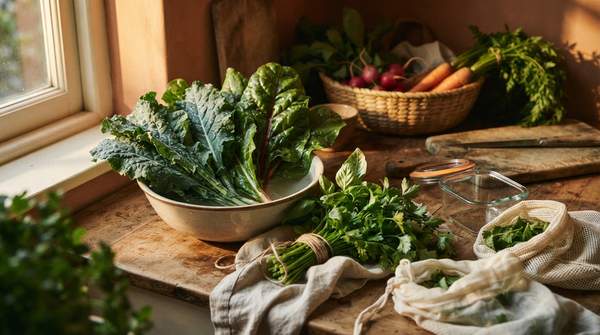
Bringing home a bounty of vibrant greens from the farmer's market is one of life's simple pleasures, a tangible connection to the earth and the hands that cultivated your food. But the joy can quickly fade if those beautiful greens wilt before you have a chance to enjoy them. The good news is that with the right home storage methods, specifically tailored to the type of green, you can significantly extend their shelf life, preserve their crispness, and minimize food waste. The secret lies in understanding how greens lose their freshness and how to effectively manage moisture. Understanding Why Greens Wilt: The Role of Water
Imagine a fresh head of lettuce or a bunch of kale, vibrant and full of life. This vitality comes from water. As Nourse Farm explains, leafy greens like lettuce, kale, and Swiss chard are composed of more than 90% water. This high water content is precisely what gives them their satisfying crispness and firm texture.
However, the moment these greens are harvested, they are cut off from their natural water source. Despite this, they continue to "breathe" and use up their internal moisture. This continuous process of moisture loss is the fundamental reason greens begin to wilt and lose their texture, often within a day or two of harvest. Just as our bodies need proper hydration to thrive, greens require careful moisture management to maintain their crispness and extend their life in your kitchen. Understanding that "water is everything" for greens, as Nourse Farm emphasizes, is the first step toward effective preservation.
Reviving Wilted Greens: A Simple Rehydration Trick
Don't despair if you discover your once-vibrant greens looking a bit limp and tired in the refrigerator. Often, they can be brought back to life with a simple rehydration technique. Nourse Farm suggests a straightforward method: fill a bowl or your kitchen sink with cold water and submerge your wilted greens for 10 to 30 minutes. For the best results, consider placing them in the refrigerator while they soak.
The cold temperature plays a crucial role in this revival process. It slows down the natural deterioration of the greens and, more importantly, helps the plant cells reabsorb water more effectively. As the greens take in water, the internal pressure within their cells increases, which is what restores that desirable crisp bite and firm texture. This simple trick can transform seemingly lost produce, allowing you to enjoy your farmer's market investment for longer and significantly reduce food waste.
The Universal Method: Paper Towel & Bag for Most Leafy Greens
For the vast majority of leafy greens, from delicate lettuces and spinach to heartier kales, collards, and Swiss chard, a consistent and highly effective storage method involves a paper or kitchen towel and an airtight container or bag.
First, the Carrboro Farmers' Market recommends washing your greens before refrigeration to help preserve their crispiness. However, this step is immediately followed by a crucial one: thoroughly patting the greens dry to remove any excess surface moisture. As the Carrboro Farmers' Market notes, this allows them to "breathe" and prevents the conditions that lead to rapid spoilage. UC Davis Health similarly advises blotting excess moisture from greens, especially those that come in plastic boxes or bags.
Once dried, wrap the greens in a clean paper towel or a reusable kitchen towel. This towel serves a dual purpose: it absorbs any residual moisture that could lead to rot, while simultaneously creating a humid microenvironment around the greens, preventing them from drying out. Next, place the wrapped greens into an airtight container or a plastic bag. Nourse Farm highlights that this method creates a "balanced environment—hydrated inside, dry outside," which is ideal for preservation.
Finally, store this package in your refrigerator's crisper drawer. UC Davis Health points out that many refrigerator drawers have humidity settings, and the high-humidity setting is specifically designed to help vegetables stay crisp. By combining the towel-and-bag method with the high-humidity crisper drawer, you create an optimal environment that keeps delicate greens fresh for up to a week and heartier varieties crisp for up to two weeks.Special Care for Stem-Based Herbs: The Basil Example
While the paper towel and bag method works wonders for most leafy greens, some stem-based herbs, particularly basil, require a different approach to maintain their freshness. Basil, a fragrant and popular farmer's market find, is notably sensitive to cold temperatures, which can cause its leaves to blacken and lose flavor.
For basil bought fresh from the farmer's market, UC Davis Health offers a specific recommendation: store it at room temperature. The best way to do this is to treat it like a bouquet of flowers. Simply place the basil stems in a jar of water on your kitchen counter. This method allows the basil to continue drawing water through its stems, keeping its leaves vibrant and aromatic without exposing it to the damaging cold of the refrigerator. This simple adjustment ensures your basil stays fresh and flavorful, ready to enhance your culinary creations.
Key Principles for Success: Drying and Humidity Control
Beyond specific storage methods, two overarching principles are foundational for extending the life of all your farmer's market greens: proper drying and meticulous humidity control.
* Thorough Drying: As both the Carrboro Farmers' Market and Nourse Farm emphasize, removing excess moisture from your greens before storage is paramount. While washing is often recommended to preserve crispness, any lingering water on the surface creates an ideal breeding ground for bacteria, mold, and rot. Using a salad spinner or gently patting greens dry with a clean kitchen towel or paper towels is crucial. This step prevents spoilage and allows the subsequent storage method to focus on maintaining optimal hydration rather than battling unwanted moisture.
* Humidity Control: Your refrigerator's crisper drawers are not just for organization; they are engineered with specific humidity settings to optimize produce storage. UC Davis Health explains that the high-humidity setting is specifically designed to help vegetables, including leafy greens, stay crisp by preventing moisture loss. Conversely, a low-humidity setting is typically used for fruits to prevent them from ripening too quickly. By utilizing the high-humidity setting in your crisper drawer, in conjunction with the towel-and-bag method, you create a microclimate that keeps greens hydrated without becoming waterlogged, striking the perfect balance for extended freshness.
By understanding these principles and applying the right storage technique for each type of green, you can enjoy the fresh, vibrant flavors of your farmer's market haul for much longer. This mindful approach not only reduces food waste but also preserves the flavor and nutrition of your produce, allowing you to savor every bite and make the most of your investment in local, fresh food.
Comparison of Home Storage Methods for Farmer's Market Greens
| Greens Type |
Method |
Key Steps |
Effectiveness/Benefit |
Required Conditions |
| Delicate Greens (e.g., lettuce, spinach) |
Paper Towel & Bag |
Wash and thoroughly dry greens. Wrap in a clean kitchen or paper towel. Place in an airtight container or plastic bag. Store in refrigerator's high-humidity crisper drawer. |
Keeps greens fresh for up to one week by creating a humid environment while absorbing excess moisture. |
Thoroughly dried greens, clean towel, airtight container/bag, refrigerator crisper drawer (high humidity). |
| Heartier Greens (e.g., kale, collards, Swiss chard) |
Paper Towel & Bag |
Wash and thoroughly dry greens. Wrap in a clean kitchen or paper towel. Place in an airtight container or plastic bag. Store in refrigerator's high-humidity crisper drawer. |
Keeps greens fresh for up to two weeks by creating a humid environment while absorbing excess moisture. |
Thoroughly dried greens, clean towel, airtight container/bag, refrigerator crisper drawer (high humidity). |
| Wilted Greens (all types) |
Rehydration |
Submerge wilted greens in a bowl of ice water for 15-30 minutes. For best results, place in the refrigerator while soaking. |
Restores crispness and texture by allowing greens to absorb water. |
Cold water, bowl/sink, optional refrigeration during soak. |
| Basil (stem-based herbs) |
Water Bouquet |
Place basil stems in a jar of water, similar to a bouquet of flowers. Store at room temperature on the kitchen counter. |
Maintains freshness and prevents blackening, specifically recommended for farmer's market basil. |
Jar of water, room temperature, away from direct sunlight if possible. |