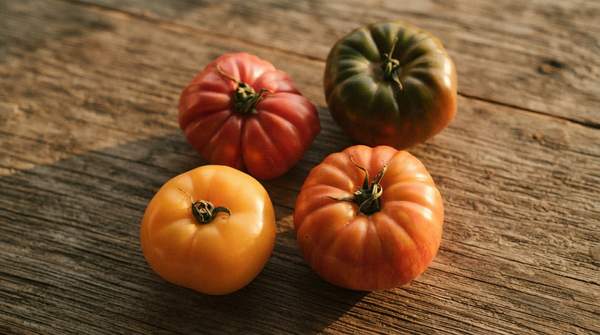
Stepping up to a farmers' market stall in late summer can feel overwhelming. The tables are piled high with heirloom tomatoes in a kaleidoscope of colors, shapes, and sizes, from deep, dusky purples to brilliant striped golds. While their beauty is undeniable, the real question for a home cook is which one will be perfect for tonight's caprese salad, which for a rich pasta sauce, and which for the ultimate tomato sandwich. Different heirloom varieties possess distinct flavor and texture profiles that make them uniquely suited for specific culinary purposes.
Understanding these differences can transform your cooking. A tomato prized for its low seed count and meaty flesh might be ideal for sauce but less exciting sliced raw. Conversely, a juicy, tangy variety that shines in a salad could turn watery when cooked. This guide provides a framework for selecting the right heirloom tomato, helping you match the variety to your recipe for the best possible flavor.
What Shapes an Heirloom Tomato's Flavor?
The celebrated taste of an heirloom tomato is more than just a single note; it's a complex balance of sugars and acids. But this profile isn't fixed. The final flavor of any tomato is profoundly influenced by its environment. According to Dorothy Stainbrook of Farm to Jar, factors like soil, climate, and watering practices all play a significant role. This means a Brandywine tomato grown in the soil and sun of California will taste different from one grown in Minnesota.
This variability is part of what makes heirloom tomatoes special, but it also means that descriptions of a variety's taste are best treated as a starting point. The world of heirlooms is vast, and local conditions create countless subtle variations. The best way to understand the specific character of the tomatoes in front of you is to engage with the person who grew them. As writers for Edible Delmarva suggest, don't hesitate to ask the farmer for their recommendations and tasting notes.
Heirloom Tomato Culinary Guide
To navigate the diverse world of heirloom tomatoes, it helps to start with your culinary goal. This table organizes several common varieties by their best use, highlighting the flavor and texture characteristics that make them a good fit for slicing, saucing, or salads.
| Variety Name | Primary Culinary Use | Flavor Profile | Texture and Characteristics |
|---|---|---|---|
| Brandywine (Red) | Slicing | Full of flavor | A well-known variety perfect for slicing. |
| German Pink | Slicing | Very sweet | A large, meaty beefsteak with few seeds. |
| Caspian Pink | Slicing | Consistently great flavor ratings | Large, flattened tomatoes; one slice can cover a sandwich. |
| Opalka | Sauces & Canning | Sweet, rich, robust flavor | A meaty, pepper-shaped paste tomato with few seeds. |
| Japanese Trifele Black | Sauces & Canning | Holds flavor well when cooked | A heavy producer of pear-shaped fruits; excellent for canning. |
| Black Krim | Salads & Slicing | Rich, with a flavor that "can't be beat" | Dark reddish-purple to black fruit with green/brown shoulders. |
Heirloom Tomatoes for Slicing and Sandwiches
The ideal slicing tomato has a firm, meaty texture that holds together, a juicy interior, and a complex flavor that can stand on its own. These are the beefsteak varieties that you can slice into thick slabs for sandwiches, burgers, or a simple plate drizzled with olive oil.
A classic choice is the Brandywine, which a Washington State University Extension guide describes as one of the best-known heirloom varieties, with red fruits that are "full of flavor" and "perfect for slicing." Another excellent option is the German Pink, an heirloom from Germany that produces very large, 16-ounce pink beefsteak tomatoes. It is noted for being "very sweet, meaty, and has few seeds." For a tomato that consistently earns high marks for taste, look for the Caspian Pink. Originally from Russia, this variety produces flattened tomatoes so large that, according to Garden Betty, "one slice covers an entire sandwich!"
Heirloom Tomatoes for Sauces and Canning
When making sauces, purées, or canned tomatoes, the best varieties are those with dense, meaty flesh, a low water content, and very few seeds. These characteristics ensure a thick, rich sauce without the need for a long reduction time. Paste tomatoes, often oblong or pepper-shaped, are typically bred for these qualities.
The Opalka is a standout in this category. Dorothy Stainbrook of Farm to Jar calls it her "all-around favorite roma" and notes that, unlike many paste tomatoes that can lack flavor, the Opalka is both "meaty with few seeds" and possesses a "robust flavor." Another excellent choice for cooked applications is the Japanese Trifele Black. This pear-shaped fruit is a heavy producer and, according to Washington State University Extension, is an "excellent canner as it holds its flavor and color well," ensuring your preserved tomatoes taste vibrant months later.
Heirloom Tomatoes for Salads and Snacking
For fresh applications like salads or eating out of hand, you want a tomato with a memorable raw flavor, a juicy texture, and visual appeal. These varieties often have a balanced profile of sweetness and acidity that makes them refreshing and bright.
The Black Krim is a superb choice for salads and sandwiches. This variety, which produces medium to large dark brown-red fruit, is celebrated for its rich, complex taste. A Washington State University Extension guide states its "flavor just can't be beat." Its dramatic, dark coloring also adds a beautiful contrast to green salads. For a burst of sweetness, the small, pear-shaped Yellow Pear tomatoes are a wonderful addition. Garden Betty describes their flavor as "mild and slightly citrusy," making them a favorite for cherry tomato salads, especially when paired with fresh cheese like burrata.
Selecting Your Perfect Heirloom Tomato
Armed with knowledge about different varieties, you can approach the farmers' market with a plan. Start by deciding on your culinary goal: are you building a sandwich, simmering a sauce, or tossing a salad? Based on that, you can choose 2-3 heirloom tomato varieties that align with your intended use and preferred flavor profile. Use the guide above to identify promising candidates like the sweet German Pink for slicing or the robust Opalka for sauce.
The final step is to talk with the growers. They can confirm the characteristics of the varieties they have that day and offer personal recommendations. The ability to confidently name and describe suitable heirloom varieties to a farmer, or to select them directly from a market stall for a specific dish, is the key to unlocking their full culinary potential and bringing the best of the season's harvest to your table.