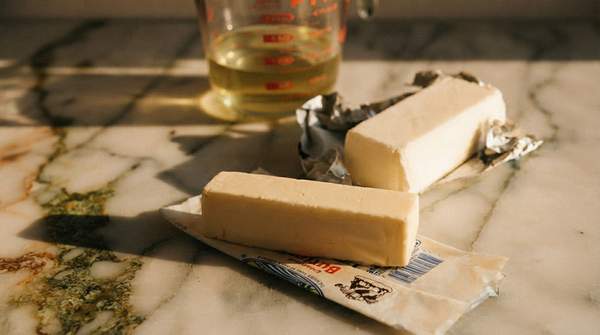
The fat you reach for—butter, shortening, or vegetable oil—does more than add richness. Its physical state at room temperature and its behavior under mixing determine whether your crust turns flaky or mealy, your cake fluffy or dense, and your cookie crisp or chewy. Solid, creamable fats like butter and shortening build light, flaky structures; liquid oil builds moist, tender, dense crumbs. Understanding why lets you pick the right fat for the result you want.
Introduction: The Science of Baking Fats
Fat is one of the hardest-working ingredients in your kitchen. As the baking educators at Baking Sense put it, fats "tenderize, add richness, carry flavor, and influence structure"—whether you're after the buttery crumb of a pound cake, the flakiness of a pie crust, or the delicate snap of a cookie. The Institute of Food Science and Technology adds that fats are used in baked products specifically to reduce gluten development, giving foods a crumbly, crisp texture. This article covers the three most common home-baking fats and how to choose among them.
How Fats Shape Texture: The Two Core Mechanisms
Fats create texture through two distinct mechanisms, and each fat performs them differently.
Gluten inhibition (tenderizing). Fat coats flour proteins, limiting gluten development and producing a softer crumb. The Institute of Food Science and Technology explains that coating the flour in fat prevents it from absorbing water, hindering gluten formation—fats literally break gluten into "shorter strands," which is where the term "shortening" comes from. Without enough fat, dough becomes stretchy and elastic.
Air incorporation (leavening). In the creaming method, solid fat traps air alongside sugar crystals, forming the structure that lets a batter rise. This is where physical state matters most: liquid oil cannot be creamed, so it traps little air compared to solid fat, as Illinois Extension notes. That single difference explains why swapping oil into a recipe built around creaming produces a flatter, denser result.
Butter: Flavor, Tenderness, and Flakiness
Butter is a solid fat at room temperature, soft enough to cream with sugar, which makes it a dual-purpose performer: it tenderizes while also trapping air for lift. It delivers a distinctive rich, creamy flavor that enhances the overall taste of baked goods, which is why it remains the default for cakes, cookies, and pastries where flavor is paramount. Because it's solid, butter can also be cut into flour in pieces, creating the fat layers that separate into flakes as they melt. The specific texture you get depends on the recipe and how the butter is incorporated—creamed, rubbed in, or cut in.