The short answer for most pet owners: there is no single best appliance for homemade pet food—there is a best category for your routine. If you want smooth, finely pureed meals, a blender fits. If you want to chop and grind meat and vegetables with your own hands on the process, a food processor is the workhorse. If you want to load ingredients, press start, and have a cooked, mixed batch ready with minimal effort, a dedicated all-in-one pet food maker is the category built for exactly that job.
This guide compares the three categories—blenders, food processors, and all-in-one makers—on their primary tasks, convenience, batch size, and cleaning, so you can match the tool to your ingredients and your patience for kitchen work. One honest caveat up front: everything here draws on manufacturer descriptions and user reports, not hands-on testing, and we compare categories rather than specific models. This is also a guide to preparation tools only—your veterinarian, not an appliance, should shape the recipe itself.
Introduction: Choosing Your Homemade Pet Food Appliance
Homemade pet food sits at an unusual intersection of cooking and caregiving. You are often breaking down both soft and tough ingredients, aiming for a texture your pet will actually eat, and doing it repeatedly—week after week, batch after batch. The wrong tool turns that routine into a chore; the right one makes it sustainable.
The three categories solve different parts of the problem. General-purpose appliances—blenders and food processors—give you control over every step but require you to be present for each one. Dedicated pet food makers, such as ChefPaw and the Total Pet Kitchen multi-cooker, fold weighing, mixing, and cooking into a single automated machine. According to ChefPaw, its maker "weighs, mixes, and gently cooks the ingredients for you," with a companion app that helps choose recipes and portions. The trade-off is the heart of this decision: manual control and versatility on one side, automation and convenience on the other.
Blenders: Best for Pureeing and Smooth Textures
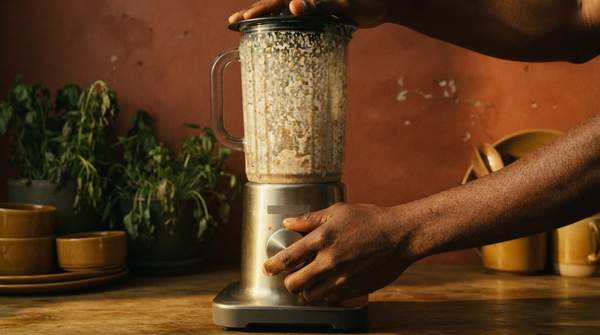
Blenders are the texture specialists. A review of blenders for dog food preparation notes that this type of machine is designed to break down both soft and tougher ingredients, helping you prepare balanced food "without lumps or chunks"—a real consideration for pets that turn up their noses at chunky meals or struggle with large pieces.
That same review highlights the benefits that matter most in a recurring routine: powerful motors, easy cleaning, and durable construction. Whether you are pureeing vegetables, meats, or supplements, the blender's job is consistency—turning everything into a uniform blend. The qualification is important, though: these advantages apply to blenders with sufficient power and blade design for the task. A weak blender will fight tough ingredients rather than smooth them.
Where a blender falls short is structure. It does not chop, grind into distinct pieces, or cook anything. If your pet prefers food with some texture, or if you are working with raw meat that you want ground rather than liquefied, a blender is the wrong shape of tool. And because the evidence base here does not establish typical batch sizes for blenders in pet food use, treat capacity as a model-by-model question rather than a category trait.
Food Processors: Versatility for Chopping and Grinding
The food processor is the most versatile manual option, excelling at chopping, grinding, and processing a wide range of ingredients, including meat and vegetables. Its effectiveness depends on blade type and motor power, but within those limits it handles the ingredient diversity of a pet food batch better than a blender: coarse grind one pass, finer the next.
There is a real-world precedent for this approach. Writing on her blog about preparing a big batch of homemade dog food, Martha Stewart describes running all the food through a food processor after mixing, noting that the step "may seem extraneous" but that she has found her dogs "prefer their food ground rather than in big chunks." It is a practitioner's observation, not a laboratory result—but it captures exactly why processors earn their place: texture control that pets notice.
The cost is your time and attention. A food processor offers a manual, multi-step process—you cook separately, process in batches, and oversee each task yourself. Cleaning is also multi-part: bowl, lid, and blades each need proper sanitation, which matters more with raw meat than with typical human cooking. For owners who want hands-on control and already cook for themselves, that overhead blends into existing kitchen work. For others, it is the friction point.
All-in-One Pet Food Makers: The Convenience of Automation
Dedicated pet food makers are built for one job, and it shows in the workflow. The Total Pet Kitchen, a 4-in-1 multi-cooker, mixes and cooks in a single ceramic-coated removable pot, which its maker says makes prepping and cleanup quick and easy. You prep and load ingredients, press start, and have cooked, mixed, and dispensed pet food in under an hour. Its listed capacity is 4.5 quarts, producing 6 to 7 pounds of dog or cat food per batch—though capacity may vary by model within the category.
ChefPaw takes a similar set-and-forget approach with a guidance layer: its Nutrition App helps you choose recipes, determine ingredient amounts, and portion appropriately, while the machine handles mixing and cooking. ChefPaw says a fresh batch takes approximately 40 minutes, depending on the recipe, and that the automation is aimed at owners who do not want to be pet nutrition experts or spend hours in the kitchen.
What these machines do not offer is versatility. They are designed for automated, integrated pet food preparation—not for your own smoothies, chopping vegetables for dinner, or grinding meat for meatballs. The single-purpose design is the point, and it is also the constraint.
Appliance Comparison: Finding Your Perfect Pet Food Prep Tool
The table below distills the three categories across the criteria that actually drive the decision: what each is best at, how much effort it demands, how much it produces, and what cleanup looks like. Read it against your own ingredients and batch ambitions.
| Appliance Category | Best For (Primary Task) | Convenience Level | Typical Batch Size | Ease of Cleaning |
|---|---|---|---|---|
| Blenders | Pureeing soft and tougher ingredients into smooth, lump-free meals | Manual, single-task; fast for pureeing but no chopping or cooking | Not established for this category; varies by model | Described as easy cleaning in blender reviews, for models with sufficient power and blade design |
| Food Processors | Chopping and grinding meat and vegetables; texture control from coarse to fine | Manual, multi-step process requiring oversight of each task, plus separate cooking | Varies with bowl size and number of batches run | Multi-part cleaning: bowl, lid, and blades each need sanitation—more involved with raw meat |
| All-in-One Pet Food Makers (e.g., ChefPaw, Total Pet Kitchen) | Cooking, mixing, grinding, and dispensing fresh ingredients in one integrated process | Automatic, set-and-forget; recipe guidance via app (ChefPaw); roughly 40 minutes per batch (ChefPaw) or under an hour (Total Pet Kitchen) | Total Pet Kitchen: 6–7 lbs of food per 4.5-quart batch; varies by model | Single removable pot (Total Pet Kitchen's ceramic-coated pot) described by the maker as quick and easy to clean |
The comparison points to a clear pattern: as automation increases, hands-on control decreases. The blender wins on texture uniformity, the processor on versatility and texture choice, and the all-in-one maker on effort per batch—especially for larger quantities destined for the freezer.
Convenience vs. Control: Making Your Decision
Strip the decision to its core and it is a trade between your time and your oversight. The general-purpose route—processor or blender—means you cook, process, check texture, and clean multiple components yourself, but you can use the same machine for your own kitchen and adjust every variable by feel. Martha Stewart's food-processor step is a good illustration: she chose the extra pass because she knew her dogs' preference, a judgment no automated machine makes for you.
The dedicated-maker route inverts that bargain. ChefPaw's pitch is that you "don't need to be a pet nutrition expert or spend hours preparing food in the kitchen"—the app guides recipes and portions, and the machine cooks. The Total Pet Kitchen promises cooked, mixed, dispensed food in under an hour from a single pot. What you give up is flexibility and, typically, budget efficiency, since a single-purpose machine does nothing else. Note that specific price comparisons were not available in the evidence reviewed here, so weigh cost at the model level when you shop.
Batch size is often the deciding variable in practice. If you are making 6 to 7 pounds at a time to portion and freeze, a machine with that listed capacity and a one-pot cleanup changes the weekly math considerably. If you are making small, fresh batches with varied textures, a processor's versatility wins.
Making the Right Choice for Your Pet's Meals
Choose the appliance category that best aligns with your primary ingredient types, desired batch size, and preference for manual control versus automated convenience. If your pet needs smooth purees, start with a blender; if you want ground textures and multi-ingredient versatility, the food processor is the category to shop; if your priority is a large cooked batch with minimal effort, the all-in-one maker is purpose-built for it.
Whatever you choose, the measurable indicator of a good decision is this: the chosen appliance consistently produces pet food with the desired texture and quantity, with a manageable cleaning routine. If after a few batches the texture is right, the volume matches your pet's needs, and cleanup does not discourage you from the next batch, you have picked the correct category. If any of those three fails, that is your signal to reassess—before the routine, and the fresh food it produces, slips away.
Sources
- ChefPaw Homepage
- Best Blender for Dog Food: Blend Meals Fast & Fresh! - Pacific St Pizza Co — Pacific St Pizza Co | Italian Restaurant in Greenvale, NY
- Another Big Batch of Homemade Dog Food - The Martha Stewart Blog — The Martha Stewart Blog | It's a blog about Martha Stewart and her daily adventures.
- Pet Supplies — AMAZON