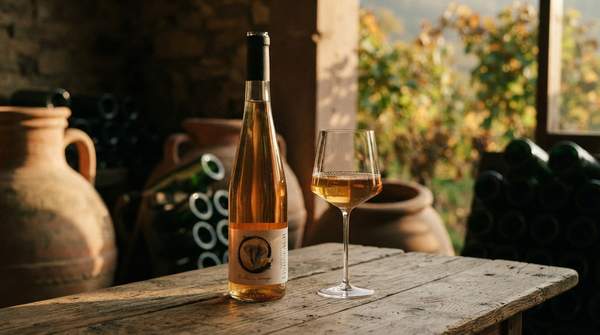
Natural wine isn't one flavor — it's a family of styles, and three of its most popular members couldn't be more different. Pét-Nat delivers a gentle, wild sparkle with fresh, fruity character and a yeasty edge. Orange wine is textured and savory, made from white grapes handled like reds. Glou-Glou is the category's easy-drinking charmer: light, juicy, and served with a chill. Once you know how each is made and what it tastes like, choosing a bottle becomes less a gamble and more a pleasure.
Understanding the Natural Wine Philosophy
Before comparing styles, it helps to understand what "natural" means — and what it doesn't. As Chris Foster of MORE Natural Wine explains, natural wine is commonly associated with minimal-intervention winemaking, but it has no single legally regulated definition, and individual producers use different techniques. There is no certification stamp guaranteeing what's in the bottle.
What unifies the category is a philosophy rather than a recipe. Because natural winemakers don't rely on commercial yeast, slow, spontaneous fermentation creates complex and unexpected flavors, according to the team at Plonk Wine Club — wines that can taste tart like a sour beer, savory, saline, or even funky. Sommelier Nicole Ramirez, writing for Alpana, notes that natural wine is made with winemaking practices front and center rather than a fixed taste profile in mind, so a bottle may arrive hazy or cloudy, carry sediment, or lean distinctly sour and tangy. Some producers go further with "zero-zero" winemaking: no added sulfur and no commercial yeast.
That unpredictability is part of the charm. Bottle variation is a feature, not a flaw, and these wines are generally meant to be enjoyed young rather than cellared for decades.
Pét-Nat: The Ancestral Sparkler
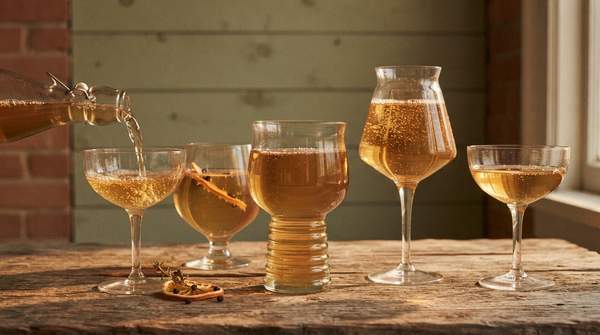
Pét-Nat — short for pétillant naturel — is the oldest way to make bubbles, and the simplest. Unlike Champagne, which finishes with a second fermentation triggered by added yeast and sugar, Pét-Nat is bottled before the first fermentation is complete. The bottle itself becomes the vessel, trapping the carbon dioxide of the finishing fermentation and creating a gentle natural sparkle.
The look is as distinctive as the method. Ramirez points out that Pét-Nats are often capped with a beer topper and frequently carry sediment or appear hazy from leftover yeast settled at the bottom — a visual cue that you're holding something unfiltered and alive. Extended contact with that yeast gives these wines a range of wild, unexpected flavors, and Total Wine & More describes them as tasting fresh and fruity, with notes that might remind you of a favorite craft beer or hard cider. A 2025 study published through IVES Open Science comparing Pét-Nat with a Charmat-method sparkling wine found the Pét-Nat's advantages lay in its soft, fruity nature and perceived naturalness, while the conventional sparkler showed sharper acidity and more pronounced effervescence.
At the table, that lively, mineral-tinged fizz makes Pét-Nats natural partners for oysters or sushi, according to Wine Insiders — and, like other sparkling wines, they're excellent with food generally.