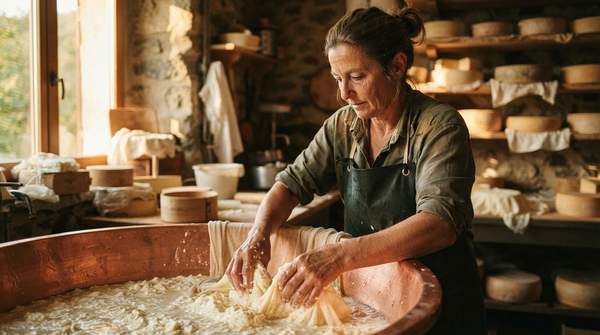
Every wheel of artisan cheese is the result of four deliberate decisions: which milk to use, which cultures to add, how to handle the curd, and how to age the finished wheel. Change any one of these variables and you change the cheese entirely. The same milk that becomes a runny Brie can become a dense Parmesan, depending on the bacteria selected, the size the curd is cut, and the temperature and humidity of the aging room. Understanding these four levers is the key to understanding why the cheese world is so varied—and it is the framework below.
The Foundation: Milk Selection and Preparation
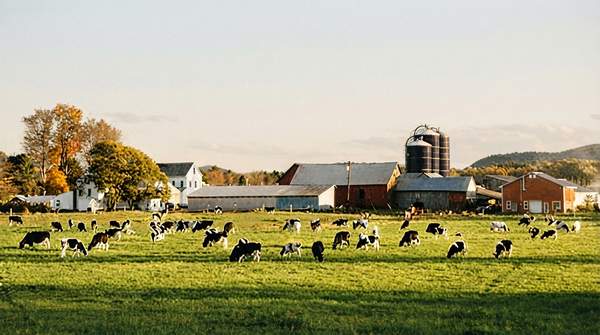
Artisan cheese begins with a simple premise: flavor expression driven by milk quality. Cheese starts as milk from cows, sheep, goats, or even buffalo, and the cheesemaker's first job is to prepare it. Regardless of whether the milk is pasteurized, the process begins with heating the milk to a set temperature for the addition of cultures, as the Pennsylvania creamery Calkins Creamery describes of its own process. Pasteurization itself is a heat treatment that kills bacteria found in raw milk.
That heating step is more delicate than it sounds. Even heating protects the milk's proteins and prevents scorching, which is why a large pot and a reliable thermometer are the cheesemaker's first tools. The milk is also filtered before it ever reaches the vat. From the very start, the animal and the treatment set boundaries on what the final cheese can be.
Starter Cultures: Architects of Flavor and Texture
Once the milk is at temperature, the cheesemaker adds starter cultures—good bacteria that ferment lactose, milk's natural sugar, into lactic acid. This acidification is what helps give cheese its flavor and sets the stage for curd formation. As Calkins Creamery puts it, "We use different cultures to create different types of cheese."
Cultures are classified by the temperature at which they work. Mesophilic cultures, meaning "medium-loving," propagate best at moderate temperatures and are used for cheeses like Cheddar and Gouda. Thermophilic cultures, "heat-loving," are added to milk heated to higher temperatures and are essential for cheeses such as Swiss, Parmesan, and Provolone—drier, longer-aged styles where the proteins transform differently during aging.
Within these groups, specific bacteria produce signature effects. According to cheesemaking supplier guidance, Diacetylactis produces diacetyl, adding a slightly butter-like flavor, while Leuconostoc generates carbon dioxide gas, contributing to small holes and a more open texture—characteristics found in Brie, Camembert, Gouda, Blue, and Havarti. Penn State Extension adds that cheeses with eyes, like Swiss, use cultures that produce gas to create the characteristic holes and flavor, while blue and Brie rely on blue or white molds. Penicillium camemberti forms the white surface of Brie and Camembert; Penicillium roqueforti ripens blue cheese.